
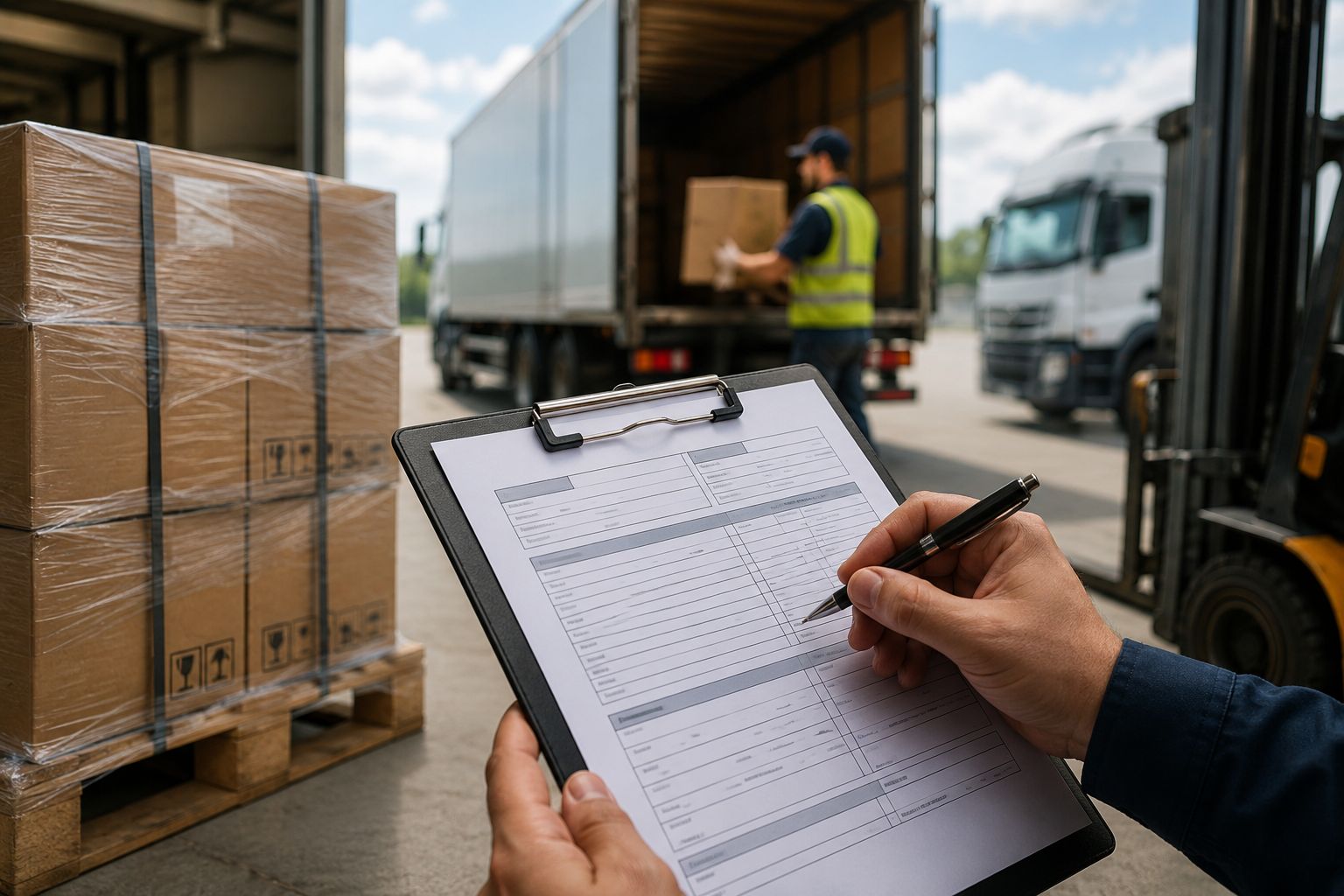
If you work with freight, you’ve probably heard the term con note more than a few times. It’s a standard part of transport and logistics, and for many businesses, especially those outside the freight industry, it isn’t always obvious what it actually does or why it matters.
Put simply, a consignment note is one of the key documents attached to a shipment. It helps identify what’s being moved, where it’s going, who it’s for and how it should be handled along the way. On the surface, it may look like basic paperwork. In practice, it plays an important role in helping freight move accurately, efficiently, and with fewer avoidable mistakes.
For businesses managing regular deliveries, having a clear understanding of the purpose of a con note can make day-to-day freight operations much easier to navigate. It also helps explain how shipments are tracked, checked and processed across the supply chain.
What is a consignment note?
A consignment note is a transport document that travels with a shipment and contains the details needed to move that freight correctly. It tells everyone what the shipment is, where it needs to go and any important instructions that need to be followed. It’s usually created when the freight booking is made and stays linked to that shipment throughout the delivery process.
Depending on the shipment, a consignment note may include:
- the sender’s name and contact details
- the receiver’s name and delivery address
- a description of the goods
- quantity, weight or volume
- handling instructions
- delivery references
- a shipment or consignment reference number
- any special notes relating to the freight
What does a con note do?
The value of a consignment note goes well beyond having a printed label or delivery sheet. In freight transport, it acts as a shared record between everyone involved in moving the goods. That includes the sender, the freight provider, the driver, warehouse teams and the receiver.
It helps keep everyone working from the same set of shipment details (this matters because even small mistakes in addresses, item descriptions or delivery instructions can quickly turn into delays, failed deliveries or added costs). It also creates a record that can be checked later if there is any confusion about what was sent, when it was booked or how it was supposed to be delivered.

What is a consignment number?
A consignment number is the unique reference attached to a specific shipment. It usually appears on the consignment note and is used to identify the freight throughout the transport process. You can think of it as the shipment’s tracking reference; it helps freight providers and customers locate the job in the system, check delivery progress and connect the freight to the right documentation.
This number becomes especially useful when businesses are managing multiple deliveries at once and need a simple way to trace individual shipments through dispatch, transit and delivery.
Why does a consignment note matter?
A consignment note matters because it supports accuracy, accountability and smoother freight handling. Without clear shipment documentation, there is more room for confusion, delays and avoidable operational issues. Here are some of the main reasons it matters.
It helps reduce delivery errors
A con note gives carriers and delivery teams the information they need to complete the job correctly, including delivery address details, freight descriptions and any special instructions attached to the shipment.
It supports tracking and visibility
Because the consignment note includes the shipment reference, it helps businesses and freight providers monitor freight through different stages of the journey. This becomes especially useful when managing multiple deliveries at once.
It creates a freight record
The consignment note acts as a documented record of what was shipped and where it was meant to go. This can be useful for customer service, internal reporting and resolving discrepancies if they arise.
It helps coordinate multiple parties
Freight transport often involves more than just one sender and one driver. There may be warehouses, transfer points, third-party carriers and receiving teams involved. A consistent document helps keep everyone aligned.
What information is usually on a consignment note?
While formats can vary, most consignment notes include a core set of details used to identify and process the freight. These commonly include:
- consignor details, meaning the sender
- consignee details, meaning the receiver
- pickup and delivery information
- a description of the goods
- carton, pallet or item count
- weight and dimensions
- delivery instructions
- dangerous goods or special handling notes, where relevant
- the consignment number
The more accurate this information is, the easier it is to move freight efficiently and avoid issues.
Is a consignment note the same as an invoice?
No, a consignment note is not the same as an invoice. An invoice is a billing document used to request payment. A consignment note is a freight document used to identify and manage a shipment. The two can be connected in a broader workflow, but they serve different purposes.
One relates to payment, the other relates to the movement of goods. This distinction is useful for businesses that are still getting familiar with freight documentation and trying to understand where each document fits.

Paper-based versus digital consignment notes
Traditionally, consignment notes were printed documents that travelled physically with the freight. Many businesses still use paper-based versions in some settings. Increasingly, though, freight operations are shifting towards digital systems that create, store and update shipment documentation electronically.
Digital consignment notes can help businesses:
- reduce paperwork
- improve accuracy
- speed up processing
- connect freight documentation with tracking systems
- create easier access to shipment history and reporting
For growing businesses, digital freight workflows can make it much easier to manage higher shipment volumes without creating extra admin.
Why does this matter for Australian businesses?
In a busy environment, small documentation issues can create bigger operational problems. Incorrect addresses, missing references or unclear delivery instructions can all slow things down, and that’s why it helps to understand how consignment notes fit into the broader freight process.
A well-managed documentation process can support better delivery performance, stronger communication and more reliable freight outcomes. It also helps businesses stay organised as shipping volumes grow and logistics needs become more complex.
How TIG Freight Management helps simplify freight documentation
At TIG Freight Management, we know that freight documentation needs to support speed, visibility, and accuracy, not create extra friction… that’s why our freight solutions are designed to help businesses manage shipments with greater control, clearer tracking and more efficient workflows. Whether you’re looking to improve your dispatch process, reduce manual freight admin or gain better shipment visibility, our technology and support can help make transport operations easier to manage. We have comprehensive solutions for organisations operating in B2B, e-commerce, enterprise and more.
To find out more, please don’t hesitate to get in touch with our dedicated sales team.


